

I
The premise, agreed
The scenario is written before the evening, by note, together. Who we are, where we meet, how it starts. Half the pleasure is in the plotting; I contribute shamelessly.
Experiences · An evening in character
We had agreed by note that we did not know each other. So I arrived twenty minutes early, took the far end of the bar, ordered something I would never normally drink, and made him work for the introduction. He was dreadful for about ninety seconds and then he was very good indeed. Somewhere in the second act he invented a detail about our fictional past that was better than anything I had written, and I nearly broke, and he has never been told that. A premise is a set of walls two people agree to keep standing. Everything worth having happens because they stay up.
I studied people for years. Playing one more is easy.
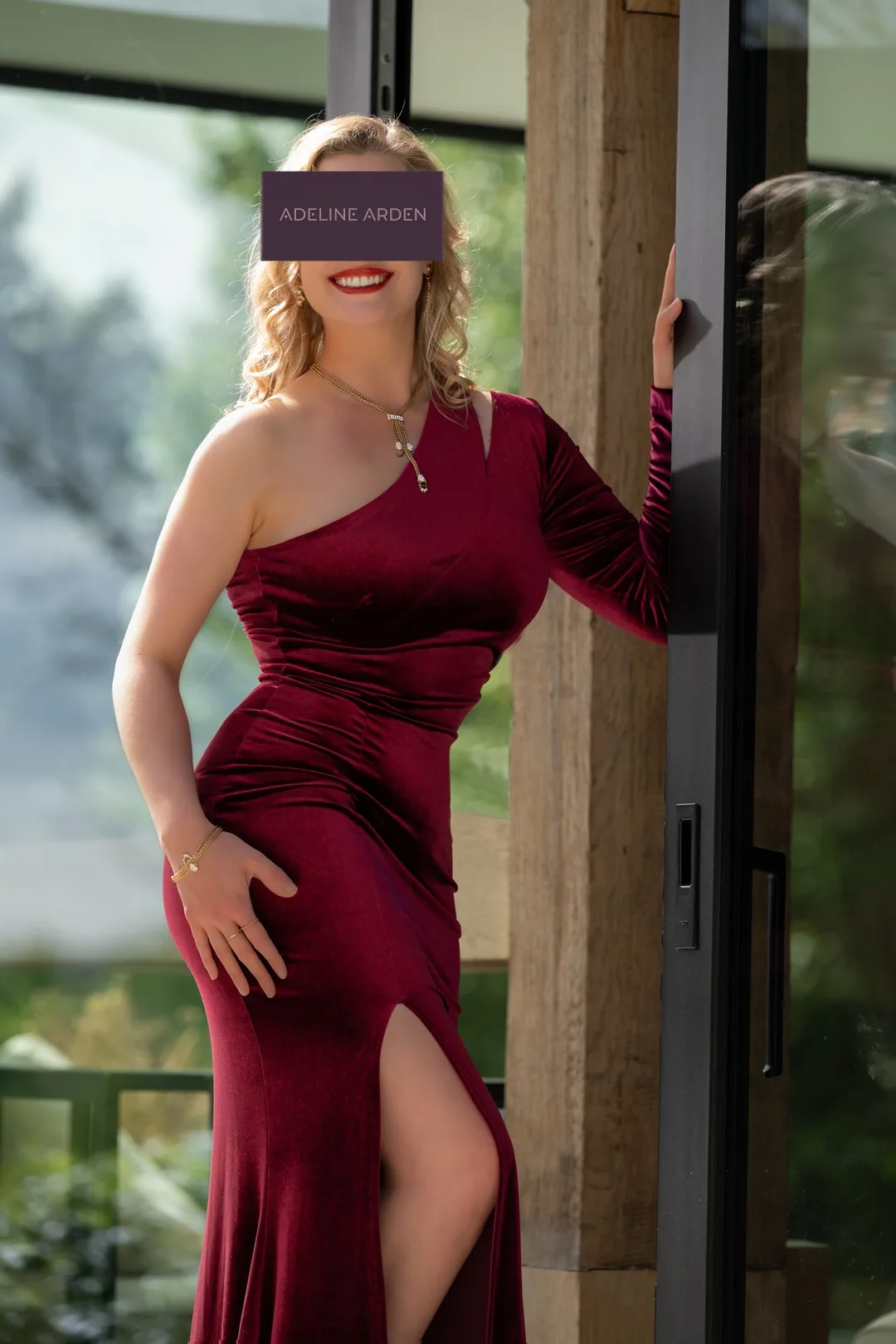
How the curtain rises
I
The scenario is written before the evening, by note, together. Who we are, where we meet, how it starts. Half the pleasure is in the plotting; I contribute shamelessly.
II
A premise only works if both people protect it. I stay in character with a straight face and a glint. The moment you almost break is, frankly, what I play for.
III
Good scenes are doors: they open into the real evening whenever we let them. However far we take it, the two people underneath have agreed on everything that matters.
This suits you if
A scenario built to smuggle something past a boundary gets a short answer: the character agrees to nothing the woman has not. No coercion played straight, nothing that mocks real people in our lives, and nothing the two actual adults in the room have not both chosen. The play is fiction. The consent is real, and it is checked in daylight.
The practical part
Sketch your premise in the note. A sentence is enough; I will help write the rest. If you would rather I propose the scenario, say so: I have a repertoire and no shame about it. Favourite films are fair game too: a Bond cold open, Mr. & Mrs. Smith over dinner, strangers on a night train à la Before Sunrise, or the slow-burn duel of The Thomas Crown Affair.
Arrangements unchanged: screening, deposit, hours per The Hours. Scenes love time: four hours minimum, six if the premise deserves a slow burn. Pairs perfectly with a suite evening. And should a scene call for something specific to be acquired, a particular outfit or a prop worth owning, it is arranged and settled in advance, like any shared expense.
One thing never appears on the bill: the shape itself. Every experience on this site is included in the hours. The only additions are real ones, agreed in advance: date expenses such as dinner and travel, a suite when I arrange one, or specific items an evening asks me to buy.
You will, for about ninety seconds; everyone does, including professional actors. Then the premise takes over and silly becomes the last word on your mind. Choosing a simple scenario for a first scene helps enormously.
Wardrobe, gladly: I dress for the role with enthusiasm. Anything beyond wardrobe should be raised in the note, and modesty of means is no obstacle: the best prop in any scene is commitment.
Curtain at eight
Your date, the hours, the city, and one sentence of a scene. I will take it from there, in character.
We have met before. We simply have not decided where yet.